
Granite grave vases: choosing a flower holder for a headstone
A granite vase can hold flowers on a new or existing memorial, but cemetery rule...
Need help choosing? Try our Memorial StudioNeed help choosing?
Create A MemorialCreate Memorial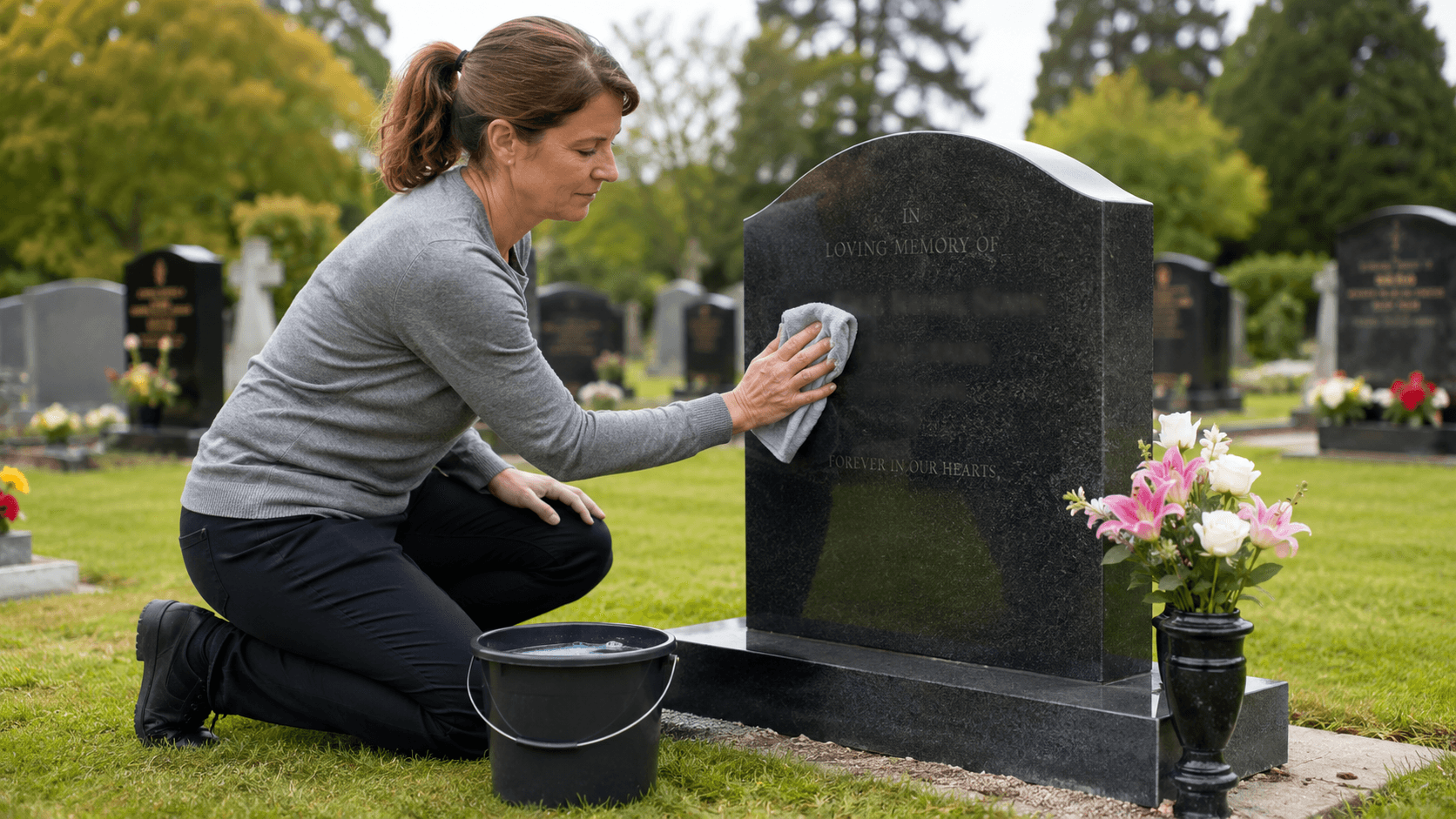
Reflections by Sandalwood
A granite headstone is designed to stand for generations, but like anything exposed to the British weather, it will naturally collect rain marks, pollen, bird droppings, grass cuttings, moss, lichen and general surface dirt over time.
The good news is that granite is one of the easiest memorial stones to care for. It is hardwearing, durable and far less porous than softer stones such as marble or sandstone. However, it still needs to be cleaned carefully. Using the wrong product or scrubbing too harshly can damage the polished surface, weaken painted or gilded lettering, or leave marks that are difficult to remove.
This guide explains how to clean a granite headstone safely, what products to avoid, how often to clean it, and when it is better to ask a professional memorial mason for help.
National stone-conservation guidance recommends using the gentlest cleaning method possible, with soft brushes, clean water and neutral cleaners only where needed. Harsh chemicals, wire brushes and pressure washers should be avoided because they can damage the stone surface and surrounding details. (National Park Service)
Before cleaning any headstone, take a moment to inspect it properly.
Do not start cleaning if the memorial is loose, leaning, cracked, chipped, unstable or showing signs of movement. You should also avoid cleaning if the lettering is flaking, the gold leaf is lifting, or any painted areas look fragile.
A light clean is usually safe for a modern, stable granite memorial, but repair work, re-fixing, re-gilding and restoration should always be handled by an experienced memorial mason.
You should also check the cemetery’s rules before carrying out any cleaning. Some cemeteries allow families to carry out light maintenance, while others may have restrictions on products, tools or work carried out within the grounds.
For routine cleaning, you do not need anything complicated.
You will usually need:
For most polished granite memorials, clean water and a soft cloth are enough. Polished granite can usually be wiped clean with a damp, lint-free cloth, but the stone should be rinsed first to avoid dragging grit across the surface.
Start by gently removing loose leaves, grass cuttings, soil, petals, twigs and any other debris from the memorial.
Do not scrape at the surface with anything metal. If debris has dried onto the stone, wet it first and allow it to soften before wiping it away.
This is especially important with bird droppings, fallen leaves and old flowers, as these can stain if left sitting on the stone for too long.
Before you wipe or brush the stone, rinse it thoroughly with clean water.
This helps remove loose grit and dust. If you wipe a dry stone, tiny particles of grit can act like sandpaper, especially on polished black granite.
Wet the whole area you intend to clean, including the face, base and any flower container area.
Using a soft cloth or sponge, gently wipe the granite from top to bottom.
Avoid using heavy pressure. The aim is not to make the memorial look brand new, but to remove surface dirt while protecting the finish.
For polished granite, a soft microfibre cloth works particularly well. Black granite may show water marks more easily than grey or lighter granites, so drying it with a clean cloth afterwards can help reduce streaks.
If the memorial has carved detail, textured granite, a rustic edge, an ornament, a vase hole, or dirt gathered around the base, use a soft-bristled brush.
A soft toothbrush can be useful around lettering, grooves and small details, but always use light pressure.
Do not use wire brushes, scouring pads, abrasive sponges, stiff metal tools or anything designed for patio cleaning.
The National Park Service advises that grave markers should only be cleaned with soft brushes and gentle cleaners, and specifically warns against wire brushes, power washers, bleach and harsh cleaners. (National Park Service)
If clean water is not enough, you can add a very small amount of mild washing-up liquid to your water.
Keep the mixture weak. You are not washing a kitchen worktop or bathroom tile; you are caring for a memorial stone, often with painted, gilded or sandblasted detail.
After using soapy water, rinse the memorial thoroughly with clean water. Do not leave soap residue on the stone, as this can dry into streaks or attract more dirt.
Once the surface is clean, rinse everything again with clean water.
This final rinse is important. It removes loosened dirt, soap residue and any debris that may have settled into the lettering or edges.
Take particular care around the base and flower container, where dirty water can collect.
Granite can be left to air dry naturally, but polished granite may benefit from a final wipe with a dry microfibre cloth.
This is particularly useful for black granite, which can show fingerprints, water spots and streaking more than grey granite.
Avoid applying oils, waxes or polishes. These may make the stone look shiny for a short time, but they can trap dirt, leave residue or cause staining.
Many common household cleaning tips are unsuitable for memorials.
Never use:
Acidic products such as vinegar and lemon juice can damage polished stone surfaces. Harsh chemicals can also affect lettering, paint, gold leaf and surrounding stonework.
No, pressure washing is not recommended.
Although granite is strong, a headstone is not the same as a patio slab. Pressure washing can force water into joints, disturb the memorial’s fixings, damage the lettering, weaken paint or gilding, and affect the surrounding ground.
It can also remove more than just dirt. On older memorials, aggressive cleaning can damage weathered surfaces and make future deterioration worse.
A soft cloth, clean water and gentle hand cleaning are much safer.
For most granite memorials, a light clean every few months is usually enough.
A good routine is:
You do not need to over-clean a granite memorial. Too much scrubbing around lettering or painted areas can cause unnecessary wear over time.
Choose a mild, overcast day if possible.
Avoid cleaning in very hot sunshine because water and soap can dry too quickly, leaving streaks. Avoid freezing weather because water can sit in small gaps or joints and freeze.
A calm, dry, mild day is ideal.
Black granite is popular because it gives a deep, elegant, polished finish. It also creates excellent contrast for white, silver or gold lettering.
However, black granite shows marks more easily than lighter stone. Fingerprints, rain marks, water spots and smears can be more visible.
To clean black granite:
Do not use polish, oil or wax to make it shine. A properly polished granite surface should not need artificial shine products.
Grey granite is generally very forgiving and easy to maintain. It does not usually show water marks as strongly as black granite and can hide light dust or rain marks more easily.
For grey granite, clean water and a soft cloth are usually sufficient. If the surface has a honed, rustic or textured finish, use a soft brush rather than a cloth to lift dirt from the surface.
Moss, algae and lichen often appear in damp, shaded cemeteries, especially near trees or older sections of a burial ground.
For light growth, start with clean water and a soft brush. Wet the area first, allow it to soften, and brush gently.
Do not scrape aggressively. Lichen can attach firmly to stone, and trying to force it off may damage the surface or lettering.
If moss, algae or lichen keeps returning, or if it covers a large area, professional cleaning may be safer. Some specialist biological cleaners are used in conservation settings, but families should always check cemetery rules and product suitability before applying anything to a memorial.
The inscription is the most important part of the memorial, so it should be treated gently.
Gold leaf naturally weathers over time. Exposure to rain, frost, sunlight, cemetery location and the direction the memorial faces can all affect how long it stays bright.
When cleaning around gold lettering, do not scrub. Use a soft cloth and light pressure only.
If the gold has faded, it may need professional re-gilding rather than cleaning.
White, black or coloured painted lettering can last for many years, but it may eventually need refreshing.
Avoid scrubbing painted letters with a stiff brush. If the paint is already worn or lifting, cleaning can make it worse.
Unpainted sandblasted lettering relies on the natural contrast of the cut stone. It is usually very durable, but dirt can settle inside the letters.
Use a soft toothbrush and clean water, gently working around the letters without applying too much pressure.
Some marks should be cleaned sooner rather than later.
Bird droppings, wet leaves, flower petals, pollen and grass cuttings can all leave stains if left on the stone. Organic material such as petals, pollen and grass cuttings should be removed promptly because they can stain the memorial.
If you notice these on the memorial, gently remove them and rinse the area with clean water.
Avoid placing metal objects directly on the stone, as they can rust and cause staining. Florist wire, old metal containers and some decorative items can also leave marks.
A very weak mixture of mild washing-up liquid and water can be used occasionally on granite for stubborn surface dirt.
However, it should not be your first step every time. Clean water is usually enough.
If you do use washing-up liquid:
No. Bleach should not be used on a granite headstone.
It may appear to clean quickly, but it can cause long-term damage, affect lettering, leave residue and harm surrounding stone or ground. It is also too harsh for regular memorial care.
The safest approach is always gentle cleaning first.
Some cleaning and maintenance issues are best left to professionals.
You should contact a memorial mason if:
At Sandalwood Memorials, we can advise on memorial cleaning, renovation, re-gilding, additional inscriptions, repairs and general memorial care. Where possible, we will always recommend the most appropriate and respectful option for the memorial, the cemetery rules and the family’s wishes.
A professional clean is not just about making the stone look better. It is also about protecting the memorial.
Experienced memorial masons understand different granite finishes, inscription methods, cemetery fixing standards, ground conditions and the risks of using the wrong tools or products.
Professional renovation may include:
If your memorial was installed some time ago, or you are unsure about its condition, it is always worth asking for advice before attempting anything more than a light clean.
The best thing to use is clean water and a soft cloth or sponge. For textured areas, use a soft-bristled brush. If needed, a very small amount of mild washing-up liquid can be added to the water, but the stone must be rinsed thoroughly afterwards.
Yes, but only a small amount in plenty of water, and only when clean water alone is not enough. Avoid strong cleaners and always rinse well afterwards.
No. Vinegar is acidic and can damage polished stone surfaces and lettering. Avoid vinegar, lemon juice and all acid-based cleaners.
No. Bleach is too harsh for memorial cleaning and can cause damage or staining over time.
No. Pressure washing can damage lettering, joints, fixings and the surrounding ground. Hand cleaning with clean water and soft materials is much safer.
Most granite headstones only need a light clean every few months. Removing leaves, flowers, grass cuttings and bird droppings regularly will help prevent staining.
Use only a soft damp cloth and very light pressure. Do not scrub gold leaf. If the gold has faded, it may need professional re-gilding.
Black polished granite shows fingerprints, rain marks and water spots more easily than lighter granite. After rinsing, dry it gently with a clean microfibre cloth to reduce streaks.
Yes. Sandalwood Memorials can advise on memorial cleaning, renovation, lettering, re-gilding and repairs. Contact us with photographs of the memorial and the cemetery location, and we can guide you on the best next step.
If your loved one’s memorial needs more than a light clean, or you are unsure what is safe to use, Sandalwood Memorials can help.
We offer professional advice on granite memorial care, cleaning, renovation, re-gilding, additional inscriptions and repairs.
Contact Sandalwood Memorials today for friendly, experienced guidance on caring for your family memorial.
We use essential, analytics and conversion measurement cookies so we can respond to enquiries and understand how the site is used. Choose Accept All if you are happy for us to also use cookies for personalised advertising. Read our cookie and privacy information