Granite grave vases: choosing a flower holder for a headstone
A granite vase can hold flowers on a new or existing memorial, but cemetery rule...
Need help choosing? Try our Memorial StudioNeed help choosing?
Create A MemorialCreate Memorial
Reflections by Sandalwood
Buying a memorial is a deeply personal decision, but it also involves important practical considerations. The right memorial should reflect your loved one, comply with cemetery regulations, suit your budget and be made to last. Before placing an order, it is worth understanding what is allowed in the cemetery, which type of memorial is most suitable, what material will work best, how inscriptions are planned, and what costs and timescales are involved. This guide explains what to consider when buying a memorial in the UK so you can make a confident and informed decision.
One of the first things to consider when buying a memorial is whether the cemetery or churchyard has specific rules in place. Different burial grounds often have their own regulations covering the size, shape, thickness, material, finish, colour, ornamentation, and style of memorials permitted within that setting.
This is important because a design that is suitable in one cemetery may not be approved in another. Some cemeteries only allow certain types of lawn memorials, while others may place restrictions on kerb sets, painted finishes, carved features, statues, or religious symbols. Churchyards may have even stricter requirements, particularly where traditional materials or more understated designs are expected.
Before choosing a memorial design, it is always sensible to confirm the regulations that apply to the grave. This helps avoid disappointment later and ensures the memorial can proceed smoothly through the approval process.
Another important factor when buying a memorial is choosing the type that best suits the grave space, the cemetery regulations, and the tribute you want to create.
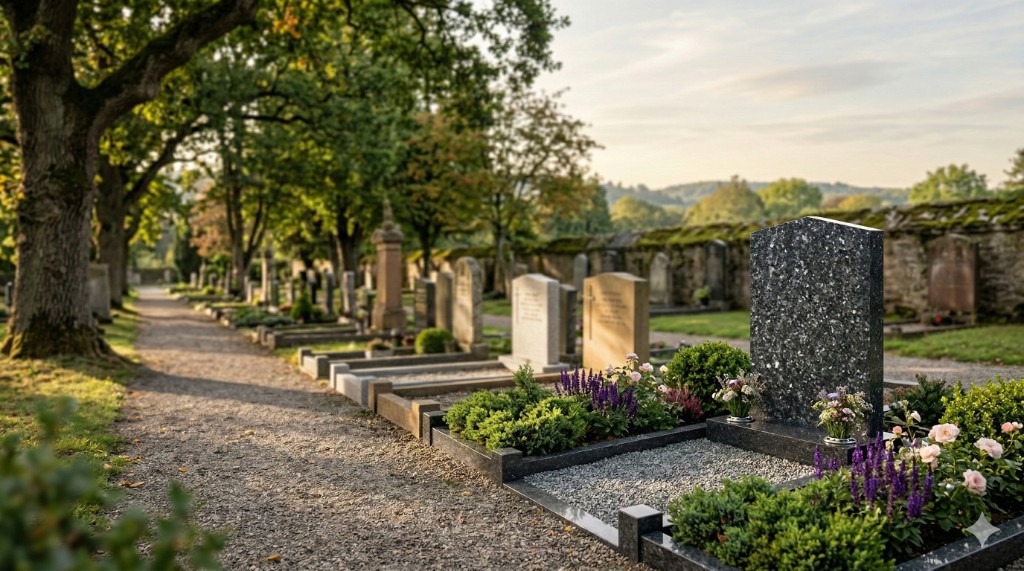
Lawn memorials are among the most popular choices in the UK. They are typically upright headstones fixed onto a base and are often the standard option in many cemeteries. They offer a dignified and lasting tribute while remaining practical and cemetery compliant.
Kerb set memorials provide a larger area for design and inscription and can create a more defined grave space. They often allow more scope for personalisation, but they are not permitted in all cemeteries, so regulations should always be checked first.
Cremation memorials are usually smaller in scale and may include plaques, tablets, small headstones, or other low-level memorials designed for cremated remains areas. These are often subject to different size and design rules.
There are also shaped memorials, such as heart memorials, book memorials, and other bespoke designs. These can offer a more personal appearance, but again, suitability depends on the regulations of the burial ground.
The right memorial is not just about appearance. It should also be appropriate for the location, practical for long-term installation, and respectful to the setting.
Material is one of the most important considerations when buying a memorial because it affects appearance, durability, maintenance, and cost.
Granite is one of the most commonly chosen materials for memorials in the UK because it is durable, weather-resistant, and available in a wide range of colours and finishes. It offers excellent longevity and is well suited to the British climate. Polished granite is particularly popular because it gives a refined appearance and provides a clear contrast for lettering.
Different granite colours can create very different effects. Darker granites often provide strong contrast for white, silver, or gold lettering, while lighter granites may create a softer appearance. Natural markings and mineral variation are also part of the character of the stone, which is worth bearing in mind when selecting a material.
Other materials may also be used depending on the location and the style of memorial required, but the key consideration should always be whether the material is suitable for outdoor use, long-term durability, and the rules of the cemetery.
When buying a memorial, it is worth thinking beyond how the stone looks on the day it is ordered. A memorial should continue to look appropriate and dignified for many years to come.
The inscription is one of the most personal parts of any memorial, so it deserves careful thought. It is often the wording that family and visitors will focus on most, and it should feel both meaningful and appropriate.
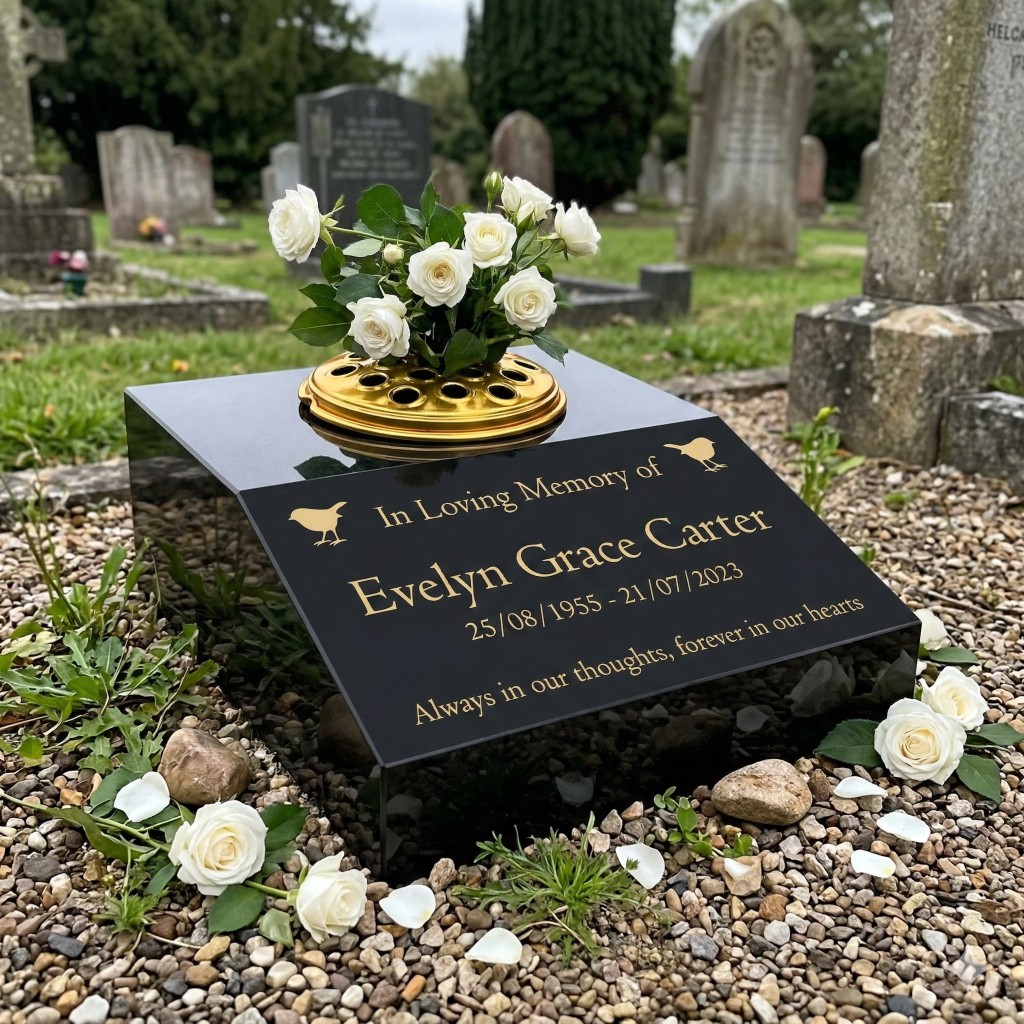
A memorial inscription usually includes the name of the deceased, dates, and a short personal message, verse, or tribute. Some families prefer something simple and traditional, while others choose wording that is more individual or reflective of the person’s life and beliefs.
When deciding what to put on a memorial, it is important to think about both meaning and layout. The number of letters can affect the overall appearance of the design, and too much wording can make a memorial look crowded. A well-planned inscription should be balanced, easy to read, and proportionate to the size of the memorial.
It is also important to check all wording carefully before approving production. Names, dates, spellings, punctuation, and line breaks should be reviewed thoroughly. Because memorials are permanent tributes, accuracy matters.
Cost is naturally one of the main things people consider when buying a memorial. The final price can vary widely depending on the style, size, material, design details, and installation requirements.
A simple memorial will usually cost less than a larger or more elaborate design, but there are several factors that can influence the overall price. These may include the type of memorial chosen, the size of the stone, the granite colour, the amount of lettering, any carved or decorative features, the finish, and the installation itself.
There may also be cemetery permit fees or other administrative charges depending on the burial ground. In some cases, additional costs may arise if the design needs to be altered to meet cemetery regulations or if further inscription is required later.
When buying a memorial, it is sensible to ask for a clear explanation of what is included in the quotation. This helps avoid misunderstandings and allows families to compare like with like. A memorial is a long-term tribute, so value should not only be judged by price alone, but also by workmanship, material quality, guidance, and aftercare.
A memorial should never feel rushed. A good buying process should give you the opportunity to review the design properly before production begins.
When ordering a memorial, it is important to ask how the approval process works. You should understand what the memorial will look like, how the wording will be laid out, and whether any design proof or visual layout will be provided before manufacture.
This stage is important because it allows any corrections or changes to be made before the memorial is produced. It also gives reassurance that the final design matches your expectations and complies with the cemetery’s requirements.
A clear approval process creates confidence. It helps ensure the memorial is right not only in terms of appearance, but also in terms of practicality, proportion, and accuracy.
Timescales can vary significantly when buying a memorial, so it is important to understand from the outset how long the process is likely to take.
A memorial is not usually something that can be supplied immediately. The process may include checking cemetery regulations, preparing the design, obtaining permit approval, arranging manufacture, completing inscription work, and scheduling installation. Bespoke memorials or more detailed designs may take longer than simpler standard options.
It is worth asking not only how long the memorial itself will take, but also whether any external factors could affect timescales. Approval delays, cemetery procedures, and installation scheduling can all influence when the memorial is finally fixed in place.
Installation is another important consideration. Memorials should be installed safely, professionally, and in accordance with recognised fixing standards. A memorial is intended to be a lasting tribute, so the quality of installation matters just as much as the appearance of the stone itself.
Choosing who makes and installs the memorial is just as important as choosing the memorial itself. A well-made memorial should combine good design advice, quality materials, accurate workmanship, and proper installation.
An experienced memorial mason should be able to guide you through the process clearly, explain what is suitable for the cemetery, advise on inscription layout, and ensure the memorial is appropriate both practically and visually. They should also be able to answer questions about materials, finishes, costs, lead times, and approval requirements.
When buying a memorial, trust is very important. Families are often making decisions at an emotional time, so clear communication, honesty, and attention to detail make a real difference. A professional memorial mason should help make the process feel straightforward and respectful, rather than confusing or pressured.
Before placing an order, it is worth asking a few practical questions to ensure everything is clear.
Ask what memorials are allowed in the cemetery or churchyard. Ask whether permit approval is required and whether this will be handled for you. Ask what is included in the quoted price, including inscription, design work, installation, and any cemetery fees. Ask whether you will receive a proof before production begins. Ask how long the memorial is likely to take from order to installation. Ask who will carry out the installation and whether the memorial will be fixed to recognised safety standards.
These questions can help you make a better-informed decision and reduce the chance of misunderstandings later.
Buying a memorial is both a personal and practical decision. The right memorial should honour your loved one in a way that feels meaningful, while also meeting the requirements of the cemetery, working within your budget, and being made to last.
By taking the time to consider regulations, memorial type, material, inscription, cost, approval, and installation, families can approach the process with greater clarity and confidence. A memorial is a lasting tribute, so it is worth getting the important details right from the beginning.
If you are considering a memorial and would like guidance on the options available, Sandalwood Memorials can help you choose a design that is both appropriate and enduring.
We use essential, analytics and conversion measurement cookies so we can respond to enquiries and understand how the site is used. Choose Accept All if you are happy for us to also use cookies for personalised advertising. Read our cookie and privacy information