

Granite grave vases: choosing a flower holder for a headstone
A granite vase can hold flowers on a new or existing memorial, but cemetery rule...
Need help choosing? Try our Memorial StudioNeed help choosing?
Create A MemorialCreate Memorial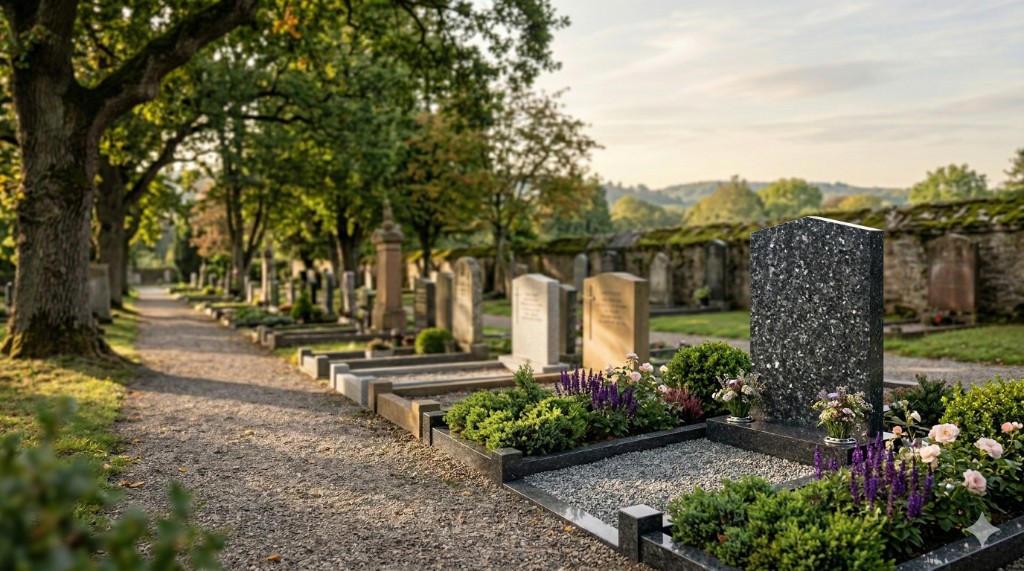
Families often arrive with a photograph of a memorial they like, then discover the burial ground will not allow that style. The usual fork is a lawn memorial (an upright headstone on a base) or a kerb memorial that frames the whole plot. Neither is “better”. The cemetery drawing is what matters.
A lawn memorial sits at the head of a lawn grave. The rest of the plot is usually grass, which the cemetery mows. Typical shapes include ogee, square, heart and book. Granite colours and current product prices are listed in the lawn collection. Height and width are not one national standard: many lawn sections sit around 2ft 6in or 3ft high, but the permit is the limit, not a catalogue average.
Because the memorial is compact, the inscription has to earn its space. Names, dates and a short line usually read more clearly than a long verse. Extra names later can often be added on the headstone or base if there is room, still with cemetery permission.
A kerb memorial (also called a full grave kerb set or kerbed memorial) adds granite kerbs around the plot, usually with a headstone. That creates a defined area for chippings, flowers and extra lettering. It is a larger piece of masonry, so it costs more to make and to fix, and it needs a burial ground that still allows surrounds.
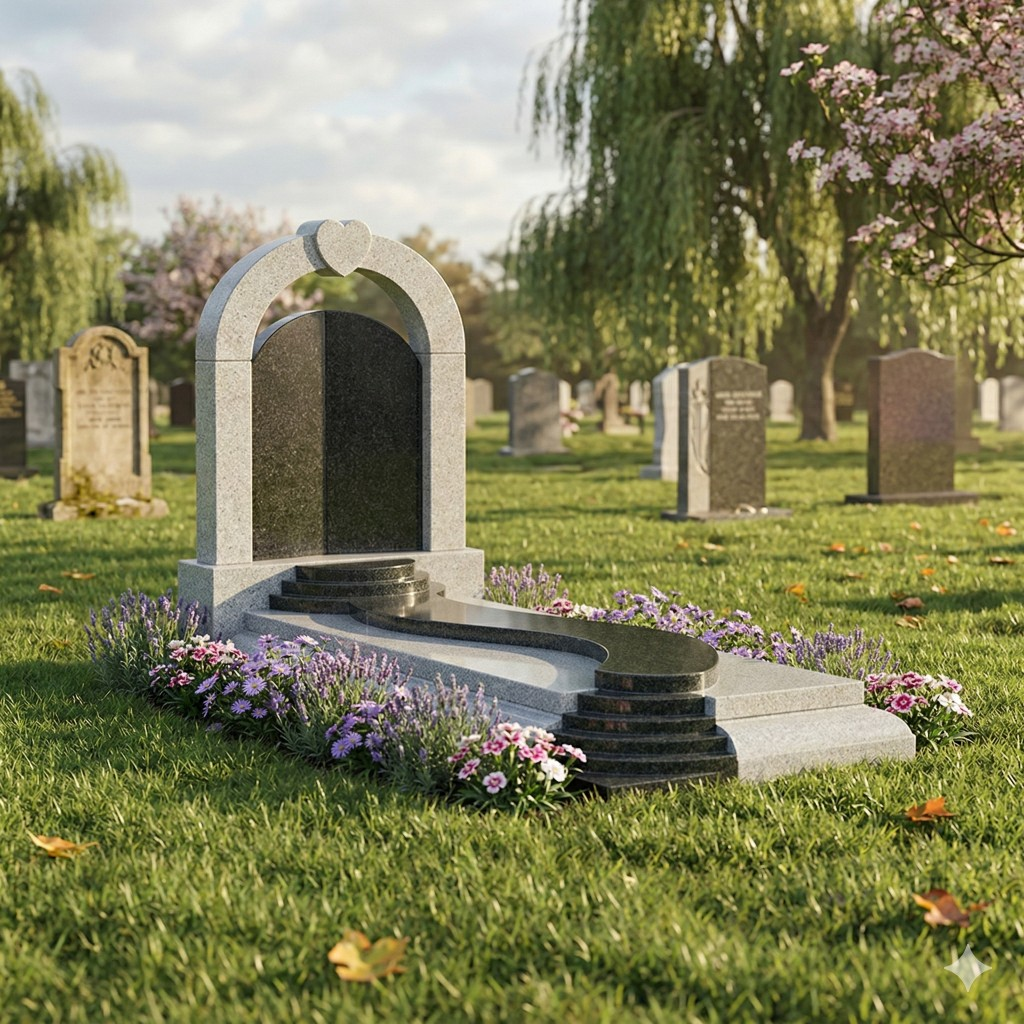
Where a full kerb is unlikely, a smaller enclosed memorial such as a garden kerb set is sometimes a closer match to what a cemetery will accept. We do not promise that swap until the location is clearer.
Lawn cemeteries were designed for mowing. Kerbs, loose vases, chippings and some ornamentation can be refused even when the neighbouring older section still has them. Churchyards and private burial grounds have different drawings again. Two plots in the same cemetery can have different rules.
Tell us the cemetery name, and the section if you know it, before you become attached to a design. We check typical limits, then prepare the application. Every design remains subject to cemetery approval.
If the cemetery only allows a lawn memorial, start in that collection and ignore kerb photographs from other sites. If kerbs are still used in that section, compare both, including how much inscription space you need for two people. Browse current designs and prices, then enquire with the cemetery name so the quotation matches the plot, not a wish list.
Sandalwood Memorials is a family-run BRAMM-accredited NAMM member with showrooms in Muswell Hill, London and Malin Bridge, Sheffield, visits by appointment. We install to recognised fixing standards. We will say plainly if a kerb set is unlikely to be permitted, rather than selling a design the cemetery is likely to refuse.
We use essential, analytics and conversion measurement cookies so we can respond to enquiries and understand how the site is used. Choose Accept All if you are happy for us to also use cookies for personalised advertising. Read our cookie and privacy information

